Glendora Village runs along Glendora Avenue and holds restaurants, cafes, shops and boutiques, many of them in converted historic buildings. When water gets in, the owner is not only drying a building. A business is trying to stay open. Water is more disruptive where people walk in off the sidewalk. Customers see the equipment, notice the damp and decide whether to come back.
Key takeaways
- The Village, along Glendora Avenue, holds restaurants, cafes, shops and boutiques, many in converted historic buildings.
- The first moves are to stop the water, protect stock and records, and photograph everything before it is moved.
- Drying in zones lets the dry side of a business stay open while the wet side is worked on.
- Food, paper goods, fabric and boxed stock that touched water are sorted, never assumed to be saved.
- A written list of what was wet, with photos, speeds up the drying plan and any insurance claim.
Why Village storefronts need a plan
Downtown buildings such as the former opera house, the movie theatre, the Pacific Electric station, banks and hotels were converted to modern uses. Buildings that change use over the decades can hide pipes, drains and ducts in unexpected places.
That makes measuring more reliable than guessing. A crew that maps moisture finds the real edge of the wet area, which may be farther than the visible stain.
Foot traffic is the lifeblood of a downtown shop. The faster a space is dry and safe, the faster customers can return.
- Plumbing added or moved as the use of a space changed
- Drains and ductwork above ceilings
- Back rooms packed with stock against walls
- Rear doors and hallways that stock is moved through
The first steps for a business owner
Speed matters, but order matters more. Safety comes before stock, and stock comes before cleanup.
Tenants in a shared building should tell the property manager right away. A leak in a wall or ceiling can begin in a neighboring space or in a shared pipe.
A tenant should read the lease for who handles building damage and who handles contents. The landlord and the insurer each have a part in the answer.
- Shut off the water at the shutoff valve if a pipe is the source.
- Switch off power to wet areas at the breaker if the panel is dry and reachable.
- Lift stock, files and equipment off the floor and onto dry shelves.
- Photograph the damage before anything is moved.
- Tell the building owner or manager, and notify the insurer.
- Tell staff which areas are closed.
What differs between restaurants and shops
Every business loses something different when water gets in.
Restaurants and cafes
Kitchen floors, floor drains and storage areas hold water. Food that touched water is thrown out, and equipment that was wet is cleaned and checked before it is used again.
Before reopening, owners check with the agencies that oversee food service.
- Floor drains checked for backflow
- Walk in storage floors dried
- Refrigeration units checked for water in the base
- Dishware and utensils washed and sanitized
Shops and boutiques
Fabric, paper, cardboard and packaging soak up water from the floor and pull it upward. Shelving legs and display bases wick it too.
Moving stock to a dry area, and keeping a count of what moved, protects both the inventory and the claim.
- Stock lifted and counted
- Display fixtures dried or replaced
- Cardboard and paper goods discarded
- Racks and legs wiped and dried
Drying in zones so doors can stay open
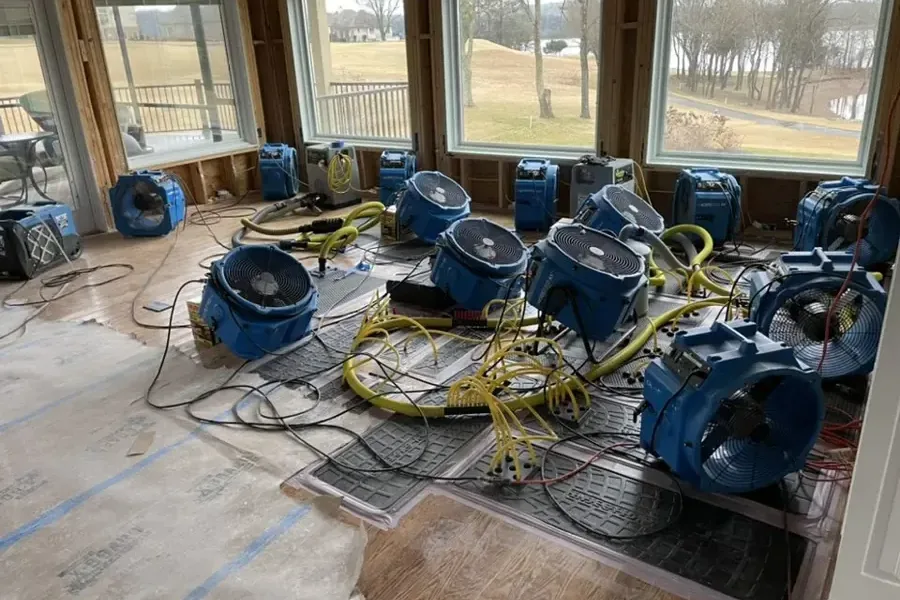
A water loss rarely covers a whole building. A crew divides the space into zones and treats the wet zones while the dry zones keep running, a method used in commercial water damage work.
More local detail is on the water damage pages for the city.
Containment and measured drying then follow the pattern of structural drying: air movers, dehumidifiers and daily readings until each zone is dry.
Equipment is noisy. Where readings allow, heavy drying can be scheduled after hours, which keeps the public side quiet during business hours.
Zones also protect neighbors. Containment keeps dust and damp air from drifting into the next suite.
- Zones are marked on a simple floor plan.
- Plastic barriers keep dust and damp air out of open areas.
- Equipment is placed to leave aisles and entrances clear where readings allow.
- Each zone is released when its readings reach a dry reference.
Bigger buildings use the same method
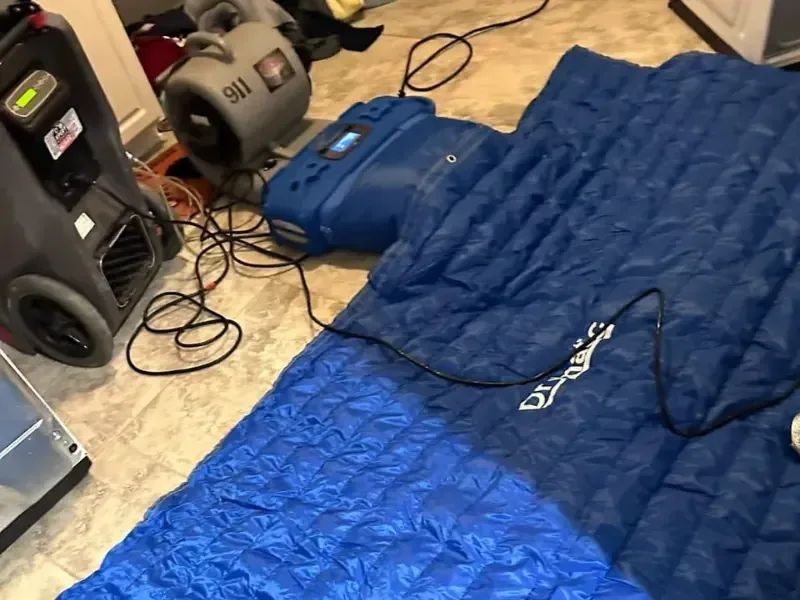
Glendora also has two hospitals, Foothill Presbyterian Hospital and Glendora Community Hospital, along with Citrus College and large retail stores. The zone method scales from a boutique to a campus, as laid out under commercial water loss on the main service pages.
In a larger building, the plan is built around operations. Which rooms must stay open, which can close and what equipment cannot get wet all decide the order of work.
- Which rooms must stay open
- Which rooms can close
- What equipment cannot get wet
- Who must be told before work begins
Rain, heat and the calendar
Glendora has a dry Mediterranean climate. It averages about 18.16 inches of rain a year, with February the wettest month at 4.76 inches, and August highs near 92 degrees F.
Winter rain tests roofs and gutters, and summer heat keeps air conditioners running, so storefronts see leaks from above in one season and condensate drips in another.
Records a business should keep
Coverage for lost business time and damaged stock depends on the policy. The paperwork below makes that discussion easier.
A photo log taken before cleanup begins makes the claim simpler. Items thrown out can be listed from the photos.
- Dated photos of the damage before and after items are moved
- A list of damaged stock with quantities
- Moisture readings and zone drying logs
- Invoices from the plumber, roofer and drying crew
Questions
Can a restaurant stay open during drying?
Sometimes. If the wet area can be sealed off and the kitchen and dining areas stay dry, part of the business can run. Readings and local food service rules decide. Even then, the dining room should be clear of equipment, cords and hoses that could trip a guest.
How are wet shop fixtures and shelves handled?
Metal and sealed wood can often be dried and cleaned. Particleboard and cardboard displays usually swell and are replaced.
What about old walls in a converted building?
They are treated the same way, with moisture readings first. Older materials can hold water longer, so readings repeat until they stay dry.
Who should be told first?
The building owner or manager, the insurer and the staff. Photos should be taken before anything is moved.
Does a small leak need a full crew?
A small leak still needs readings. Water often travels inside a wall or under a floor, and a dry surface can hide a wet cavity. Readings usually take little time and can save a larger repair later.
What if the water came from a neighbor's space?
The source still has to be stopped, and the drying plan covers every wet area. Who pays is a matter for the building owner and the insurers, so photos and readings from each space help.