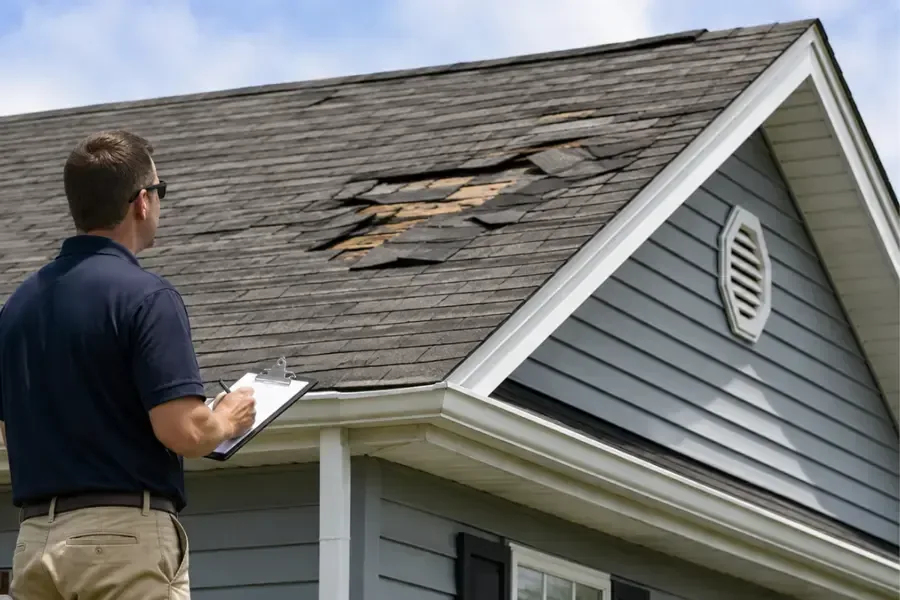
Walnut gets about 17.32 inches of rain in a year, and most of it falls in January and February. July averages none. After a long dry stretch, the first heavy storm is often the first real test of a roof, and the result shows up inside the house before anyone sees the roof.
Key takeaways
- A roof leak usually shows up inside first, as a brown stain, a bowed patch of drywall or a drip near a light fixture.
- Water travels along framing, so the stain is often not directly under the hole in the roof.
- Moving belongings, setting a bucket and taking dated photos matter more in the first hours than any repair.
- Wet attic insulation and drywall that stays damp are removed or dried. They do not recover on their own.
- About 74.7 percent of homes here were built between 1970 and 1999, so many roofs and ceilings carry years of weather.
Why the first big storm finds the weak spot
Walnut sits on the southern slopes of the San Jose Hills, and its rain comes in a short wet season. Roofs spend months dry before a storm tests them.
Dry months give leaves, dust and grit time to settle into valleys and gutters. The first heavy rain pushes water through any gap those spots have been hiding.
A gap that stayed dry all summer can drip within a single storm.
Wind adds another test. Rain pushed sideways reaches seams and edges that stay dry in a gentle shower.
- Flashing around chimneys, skylights and wall joints
- Valleys where two roof slopes meet
- Vent boots and pipe penetrations
- Gutters and downspouts packed with debris
- Cracked or lifted roofing material near the ridge
What a roof leak looks like from inside the house
Most roof leaks announce themselves on a ceiling long before anyone climbs a ladder.
Signs on the ceiling
A brown or tan ring with a darker edge is the classic stain. It often grows a little with each rain.
A bowed patch of drywall means water has pooled above it and is still being held there.
- Brown or yellow rings that spread after rain
- Peeling or bubbling paint
- A soft, sagging or bulging patch of ceiling
- Drips near light fixtures, vents or ceiling fans
Signs in the attic
Wet insulation clumps together and stops doing its job. Dark streaks on the roof sheathing and drips at nail points trace the route the water took.
Telling a roof leak from a pipe or an air conditioner
Timing is the best clue. A roof leak follows the weather, while plumbing and air conditioner leaks follow daily use.
A few questions narrow it down before anyone opens a ceiling.
When the cause is unclear, a moisture reading at the edge of the stain and a look in the attic usually settle it. The roof itself is repaired by a roofer, while the wet materials below it fall under roof leak water damage work.
- Does the stain grow during or just after rain and stop growing on dry days? That points to the roof.
- Does it grow on dry days, or after a shower or a load of laundry? That points to a pipe.
- Does it sit under an attic air handler and grow while the air conditioner runs? That points to a condensate drain.
- Is the stain below a bathroom or kitchen? Plumbing above is the likely cause.
What to do inside before the roof is repaired
The roof repair belongs to a roofer. The job inside the house is to limit what the water reaches.
If the leak is above an upper floor, check the room below as well. Water that drips through one ceiling can soak the floor system and show up again lower down.
- Move furniture, rugs and electronics out from under the stain.
- Set a bucket under any drip and cover what cannot move with plastic sheeting.
- Switch off ceiling lights and fans in the wet area at the breaker.
- Keep people out from under a bulging ceiling.
- Photograph the stain, the drip and the roof from the ground, and write down the date and the rain.
- Stay off a wet roof. A fall is a worse outcome than a leak.
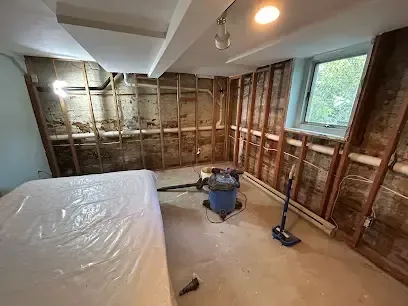
How the wet ceiling and attic get dried
Once the leak is stopped or covered, a crew checks how far the water traveled. Moisture meters read through drywall and framing, and a thermal camera can show wet areas that look dry.
A ceiling leak cleanup usually starts with the insulation and drywall closest to the stain.
Insulation and drywall that stay wet for long break down and cannot be trusted afterward. That is why removal comes first on the materials that have soaked through, and drying focuses on what can be saved.
- Soaked insulation is bagged and removed.
- Saturated drywall is cut out in clean squares so the framing behind it can dry.
- Framing and sheathing are dried with air movers and dehumidifiers.
- Readings are logged until the materials reach a normal, dry level.
When the rain keeps coming
A leak does not wait for the repair schedule. A second storm can wet the same spot again before the first stain has dried.
A tarp over the leaking section is a temporary step, and it is a roofer's job.
If rain also reaches floors, garages or low rooms, storm and runoff cleanup covers that part of the work. The same measured process used in structural drying applies to a ceiling bay as it does to a floor.
Ceilings and attics are not the only places a storm leaves marks. Walls under a leaking roof edge can wick water down from above, and a quick check of window frames and wall corners finds that kind of damage early.
Records worth keeping
Whether a roof leak is covered depends on the cause and on the policy. Paperwork makes that conversation with the insurer easier.
- Dated photos of the stain, the drip and any damaged belongings
- A short log of each rain and how the stain changed
- The roofer's invoice and any written findings
- Moisture readings from the drying crew
Questions
Is every ceiling stain a roof leak?
No. Plumbing above the ceiling, an air conditioner drain or an upstairs bathroom can also cause a stain. A stain that grows during or just after rain points to the roof. One that grows on dry days points to a pipe or an air conditioner.
Should a sagging ceiling be cut open?
A bulging ceiling is usually opened in a controlled way so the trapped water does not come down all at once. A small, dry stain can be watched while the roof is repaired.
What happens to wet attic insulation?
Wet insulation holds water against the drywall and framing, so it is bagged and removed. New insulation goes in after the area is dry.
Can drying start before the roof is fixed?
Removal and extraction can start, but full drying works best once the leak is stopped or covered. Another storm can undo the work.
Is roof leak damage covered by homeowners insurance?
It depends on the cause and the policy. Sudden storm damage is often treated differently from wear over time, so read the policy and keep dated photos.
How soon after a storm does a stain appear?
A stain can show up during the storm or days later, as water moves along framing and soaks into the drywall. A ceiling that looks dry on the surface can still hold water above it.