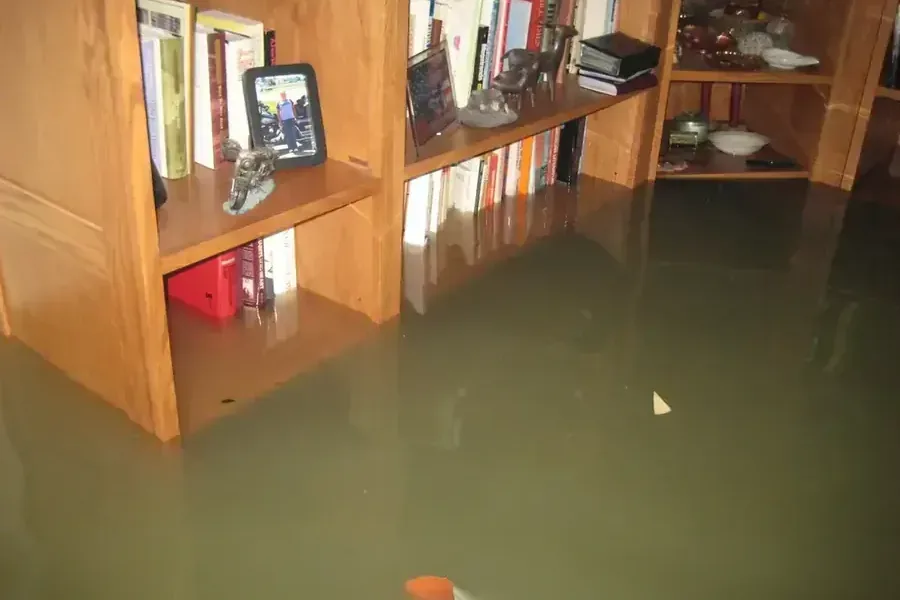
El Monte sits at about 299 feet between the San Gabriel River and the Rio Hondo. Both rivers pass through the Whittier Narrows, where Whittier Narrows Dam, built mainly for flood control, controls the outflow from each. With 18.06 inches of rain in a year and a wet season that peaks in February, storm water is part of the calendar.
Key takeaways
- The city sits between two rivers, and Whittier Narrows Dam, built mainly for flood control, controls the outflow from both.
- Rain averages 18.06 inches a year, and February is the wettest month at 4.66 inches.
- Storm water that enters a home has crossed yards, sidewalks and streets, so it is treated as contaminated.
- Severe San Gabriel River floods in 1914, 1934 and 1938 led to the dams, debris basins and channels now in place. That history is regional, not a claim about any one street.
- The order is extraction first, then removal of soaked materials, then drying and checking every low spot.
Two rivers, one dam and a long history
Early Spanish travelers named the marshy, willow covered land El Monte. It sits between the San Gabriel River and the Rio Hondo.
Before flood control, the San Gabriel River ran over a wide flood plain with shifting channels, and the Rio Hondo sometimes changed course to join it.
Severe San Gabriel River floods in 1914, 1934 and 1938 led Los Angeles County, and later the federal government, to build dams, debris basins and channels. That history is regional, and no dated flood in El Monte itself is claimed here.
Upstream, the Santa Fe Dam sits on the San Gabriel River and serves as the Santa Fe Dam Recreation Area when it is dry.
The rain calendar
El Monte has a Mediterranean climate, with a dry summer and a wet winter. Rain builds through the fall and peaks in February.
Storm cleanup work follows that curve.
Summer rain is almost absent, with 0.15 inches in June, 0.04 in July and 0.07 in August. The long dry spell is why early storms often meet downspouts and drains blocked with leaves and debris.
- October: 0.78 inches
- November: 1.45 inches
- December: 2.42 inches
- January: 3.68 inches
- February: 4.66 inches, the wettest month
- March: 3.00 inches
What storm water carries into a house
Rain that enters a home from outside is not the same as a pipe leak. It has crossed ground first.
Surface water at doors and garages
Water that reaches a door or garage has run over pavement, soil and landscaping. It carries silt, oil from driveways and organic debris, and it is handled as contaminated water.
- Silt and mud on hard floors
- Oil and grime from driveways
- Leaves and organic debris from drains and gutters
Water pushed through gaps
Wind and heavy rain can push water under thresholds, around door frames and through seams where a wall meets a floor. The visible puddle can be small while the wet area inside a wall is larger.
First steps when storm water gets inside
Safety comes first. Storm water near outlets, cords and appliances can be a shock risk.
Do not use a household vacuum on wet floors. It is not made for water and can be a shock risk.
- Keep out of standing water until the power to the area is off.
- Move furniture, rugs and electronics to higher ground.
- Block the entry point with towels or sandbags if it is still raining.
- Photograph the water and its source with the date.
- Avoid walking mud through the rest of the house.
- Keep children and pets out of the wet area.
Extraction, removal and drying
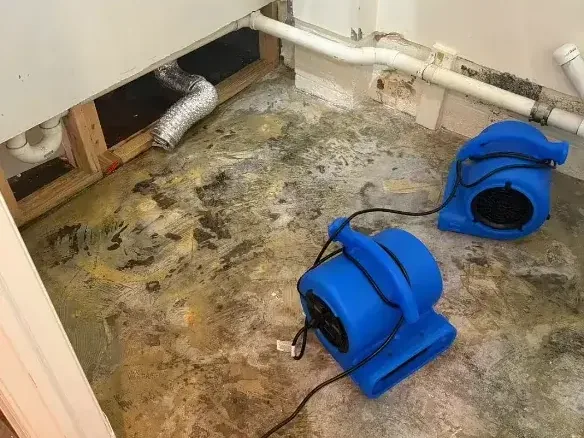
Pumps and wet vacuums remove the standing water first, as in water extraction. Speed matters because water soaks into carpet pad, baseboards and the lower drywall.
The crew then removes what cannot be dried safely and cleans what remains. This is the core of storm flood cleanup.
Cleaning follows removal, because drying alone does not remove contamination from surfaces that touched storm water.
Moisture mapping marks each wet area with a reading. The readings repeat each day, and the equipment stays until the wet area is gone.
- Carpet pad and low drywall that took on dirty water are removed.
- Hard floors and walls are cleaned and treated.
- Drying equipment runs while readings are taken each day.
- Stored boxes and low shelves are sorted into keep and discard piles.
Getting ready before the next storm
A little preparation before the wet season shortens the cleanup if water does get in. Local detail is on the El Monte water damage pages, and the same method is described under winter storm and hillside runoff cleanup.
The city's Public Works Department covers sewers and storm drains, the drinking water system and streets, so a blocked storm drain near a home is a matter for that department.
Sandbags and plastic sheeting help at doorways, but they rarely keep out a storm completely. They buy time, and the cleanup plan still matters.
- Clear gutters, downspouts and drains near the house.
- Check door sweeps and garage door seals before the first storm.
- Move stored items off the floor in garages and ground floor rooms.
- Learn where the main water shutoff is.
- Keep a few towels, plastic sheets and a flashlight in one place.
Records worth keeping
With 60.1 percent of occupied homes rented, storm damage often involves a tenant and an owner. Tenants should report water entry in writing, and owners should arrange the drying quickly, since wet materials get worse each day.
Insurance treatment of storm water depends on the policy and the cause, so the wording of the policy matters. Photos and notes taken at the time are the best record.
- Dated photos of the water, the entry point and damaged items
- A list of what was wet
- Moisture readings from the drying crew
Questions
Does Whittier Narrows Dam protect every home nearby?
The dam was built mainly for flood control and controls the outflow from the San Gabriel River and the Rio Hondo. Local rain can still enter a home from the street, a roof or a low door.
Is storm water in a house treated as clean water?
No. It has crossed ground and picks up dirt, so it is treated as contaminated. Porous materials it touched are often removed.
When does the rainy season start?
Rain builds from October at 0.78 inches. The wettest months are January, February and March, with February the highest.
Can wet carpet be saved after a storm?
It depends on how long the carpet was wet and how dirty the water was. Contaminated water usually means the pad and often the carpet are replaced.
Should a homeowner start drying before extraction?
No. Standing water comes out first. Fans and heaters pointed at wet carpet before extraction can spread moisture.
What if the water came through the roof instead of the door?
That is a roof leak rather than surface water. The ceiling and attic are handled differently from floors, though the same moisture readings steer the work.