Water Extraction and Removal in El Monte
Standing water ruins flooring and soaks into the subfloor fast. Extraction crews use pumps and wet vacuums to pull it out of El Monte homes and businesses, then hand off to drying.
(888) 563-9619El Monte water pumped out help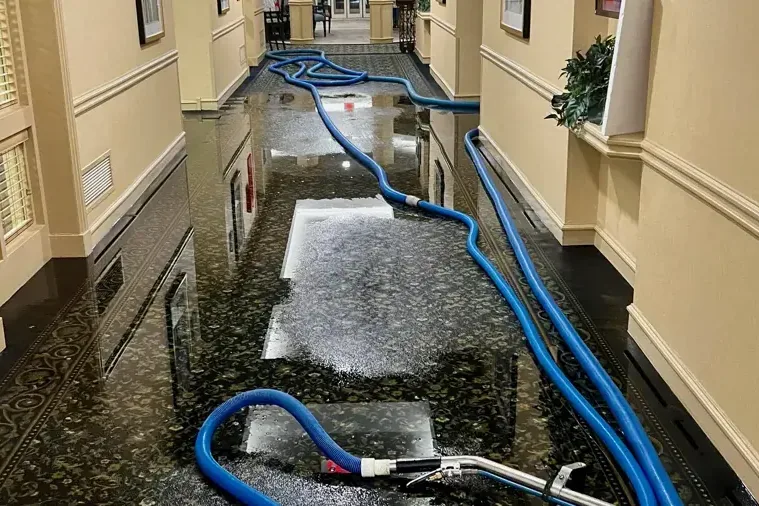
What every water extraction and removal job includes
Extraction comes first
Truck-mounted and portable extractors pull free water before any fan goes down, since lifting liquid water out is far faster than evaporating it.
Dried to IICRC S500
Air movers and LGR dehumidifiers are sized to the class of loss, and the equipment stays until readings sit within 2 to 4 points of a dry reference.
A claim file built on site
Moisture maps, daily psychrometric logs and timestamped photos taken before any demolition give the adjuster a clear record of the loss.
Valley houses, valley habits
Slab floors with copper underneath, attic air handlers and large floor plans decide where water hides, so the walkthrough checks each one.
What to do right now about water extraction and removal
- Find the water. The crew traces the source and checks how far the water traveled.
- Pump and vacuum. Pumps clear the depth and wet vacuums lift the rest.
- Lift what cannot dry. Saturated pad and loose trim come out of the room.
- Read the moisture. Meters show what is still wet and set the drying plan.
What does water extraction and removal cost in El Monte, CA?
Extraction alone usually costs $350 to $1,200 for a spot job and climbs to $4,000 to $9,000 when a whole floor is wet. Depth, water type and square footage decide where a job lands.
Spot extraction
- One wet room or corner
- Quick pump and vacuum
- Short moisture check
Several rooms
- Two to four rooms wet
- Pad and trim removal
- Several days of drying
Whole floor
- Most of a floor wet
- Heavy pumping and lifting
- Extended drying plan
What the claim file holds
Ranges are typical, not a quote: the water category, square footage, material class and how fast drying started move the number most. Sudden and accidental water from a pipe, appliance or tank is often covered by a homeowner policy, while surface flooding usually needs a separate flood policy, so check your own policy.
The mitigation team builds the file an adjuster reads: a moisture map, daily psychrometric logs, timestamped photos taken before demolition, the category and class, and a line-item scope. For a closer range, run the water damage cost calculator.
How water extraction and removal is handled, step by step
Check the water
Type and depth are assessed first.
Pump it out
Pumps and vacuums clear the standing layer.
Remove soaked pieces
Pad and damaged trim are cut out.
Verify with meters
Readings confirm what needs drying next.
Water that sits on a floor does not stay on the surface. In El Monte, where February alone averages 4.66 inches of rain and the yearly total reaches 18.06 inches, storm water and plumbing failures bring many extraction calls through the winter months. The first job is always to get the water out.
How extraction works inside a home
Technicians start by finding the lowest wet area and checking whether the water is clean, gray or contaminated. Pumps handle standing depth, wet vacuums follow for the thin film left on hard floors, and carpet pad that cannot dry in place is cut out and removed so it stops holding moisture.
What happens after the water is out
Removing the standing layer is only the first half. Floors, baseboards and wall bottoms stay damp, so the crew takes meter readings, sets air movers where they are needed and sends the job on to structural drying for the rest of the dry out. Skipping that step is how a dry looking floor turns into buckled boards and musty walls a few weeks later.
Why speed matters after a storm
Winter downpours can leave water in garages, entries and low rooms of El Monte homes, and the longer it sits the deeper it travels. Clean water starts to change within a day, so calling early often means keeping the flooring that would otherwise be removed. A leak that began inside the house is covered on the burst pipe page.
Water extraction and removal across El Monte and nearby communities
The extraction crew covers the whole city, including Mountain View, Flair Park and the central business district, along with homes near Valley Boulevard and Santa Anita Avenue in ZIP codes 91731 and 91732.
The same service nearby: water extraction and removal in Walnut, Glendora, Pomona.
Related water damage services in El Monte
Water Extraction and Removal questions, answered
Still dealing with it?
Standing water gets deeper into floors as time passes, so describe what is wet and the team will map out the extraction.
(888) 563-9619 Explain the wet floorHow soon should standing water be removed?
As early as possible. Clean water starts soaking into subflooring and drywall within hours, and the sooner it is pumped out, the more flooring can be saved.
Does extraction include drying?
Extraction removes the bulk of the water. Drying equipment is a separate step that follows it, and most wet floors need both before the structure returns to normal moisture levels.
Can carpet be saved after a flood?
Carpet that stayed wet with clean water for a short time can often be dried in place, but the pad beneath is usually removed. Gray or sewage water means carpet is normally discarded.
What if the water came from outside?
Storm runoff can carry soil and debris, so it is treated with more caution than a supply pipe leak. The crew checks the water type before choosing what to keep.
Can a homeowner use a shop vacuum?
A shop vacuum helps on a small spill, but it leaves moisture in the subfloor and wall bases. A professional pump and a meter check are the safer path for anything larger than a puddle.
Get standing water out of the house
The extraction crew works at any hour, so a flooded El Monte home can start the pump out right away.
(888) 563-9619Call about the pump out