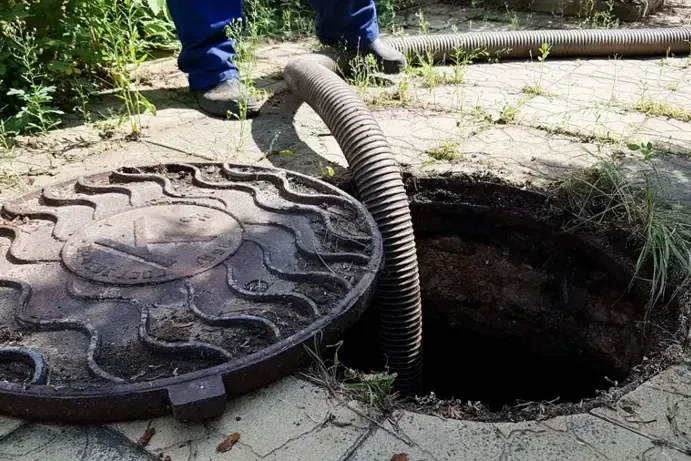
When sewage comes up in a toilet, tub or floor drain, the first question is whose pipe it is. In Montclair, the answer splits in two. The city maintains the main sewers, while the pipe from the house to the main belongs to the property owner. Knowing the split early saves an owner from waiting on the wrong party.
Key takeaways
- The building sewer, the pipe that carries wastewater from the house to the main, is the property owner's responsibility.
- The city's Public Works Sewer Maintenance Division maintains the main sewers and cleans all of them every two years.
- City crews can televise a building sewer at no cost to find a blockage, but only if a cleanout is installed.
- Sewage that comes up inside a house is Category 3 water. Porous materials it touched are removed and surfaces are disinfected.
- Building permit records show whether a property is on the city sewer or still has a septic tank.
Who maintains which pipe
Two pipes matter in a backup. One is public and one is private.
The two pipes meet at the edge of the property, so the difference matters when a plumber finds a blockage. The camera findings show which pipe holds it.
The main sewer
The city's Public Works Sewer Maintenance Division maintains the main sewers across Montclair. All main sewers are cleaned every two years and inspected on an ongoing basis, with extra cleaning where grease builds up.
The building sewer
The building sewer carries wastewater from the building to the main. It is the property owner's responsibility.
That means the owner arranges the plumber when the blockage is in that pipe.
Why a cleanout matters
City crews can televise a building sewer at no cost to find a blockage, but only if a cleanout is installed. A cleanout is the capped opening that gives a camera or a cable a way into the pipe.
Without one, the plumber may have to remove a toilet to reach the pipe.
A camera inspection also shows the cause, whether roots, grease, a damaged section or an object. That finding steers the repair and any later insurance claim.
- Find the cleanout cap before a backup happens, and keep it clear of plants and debris.
- Mark its location on a house sketch kept with other papers.
- If none exists, ask a plumber whether one can be installed.
- Ask the city about its no cost camera check once a cleanout is in place.
What a backup looks like
Backups rarely start with a flood. They usually announce themselves first.
If only one fixture is slow, the problem is probably local to it. If several are slow at once, the blockage is farther down the pipe.
- Gurgling sounds from drains when water runs elsewhere
- Slow drains in several fixtures at once
- Water rising in a tub or shower when a toilet is flushed
- A sewage smell near a floor drain
- Wastewater coming up through a floor drain or the lowest fixture
First steps inside the house
Sewage carries bacteria and should not be touched with bare hands. Protection comes before cleanup.
Do not use chemical drain cleaners on a backed up sewer pipe. They can splash and burn, and they rarely clear a blockage that sits deep in the pipe.
A plumber's visit is the fastest way to learn where the blockage sits. The restoration crew works in parallel, since contamination spreads while the pipe is being cleared.
- Stop using sinks, toilets, showers and the washing machine.
- Keep children, pets and anyone with health concerns out of the affected rooms.
- Open windows if the weather allows.
- Photograph the water and the fixtures with the date.
- Call a plumber for the blockage and a restoration crew for the cleanup.
How a Category 3 cleanup works
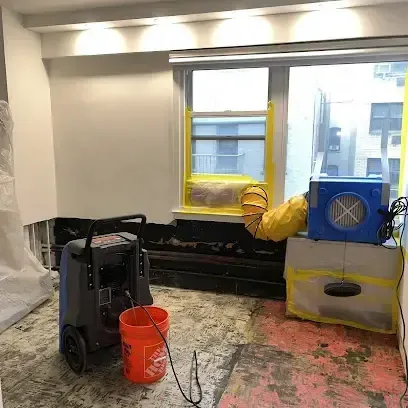
Containment comes first. Plastic barriers keep the affected rooms apart from the rest of the house, so the work does not carry contamination into clean areas.
Category 3 water is grossly contaminated. The work follows a strict order, and the sewage backup cleanup steps apply whoever owns the pipe.
Standing liquid is pumped out, and water extraction is followed by removal of materials that cannot be cleaned.
Gloves, boots, eye protection and respirators are part of the work. That is one reason sewage jobs go to crews equipped for them.
- Carpet and pad that touched sewage are removed.
- Baseboards and drywall that wicked contaminated water are cut out.
- Hard surfaces are cleaned and disinfected.
- Drying equipment runs until readings return to normal.
- Items that cannot be cleaned are listed and photographed before disposal.
Sewer or septic: what permit records show
The city tells owners to check building permit records to learn whether a property is on the city sewer or still has a septic tank. A septic system changes who a plumber looks to when a backup happens.
The sewage backup cleanup method for the inside of the home is the same either way.
A property on a septic tank has a tank and a drain field instead of a connection to the main. A backup there points to the tank or its field, and the city's main sewers are not involved.
Records worth keeping
Coverage for sewage backups depends on the policy, and some policies treat backups separately from other water losses. The paperwork below helps.
Owners of rentals should also keep tenant notices and the dates they were received.
- Photos of the water, the fixtures and the damage
- The plumber's report and any camera images
- A list of items removed
- Moisture readings and the cleanup log
- The date the plumber or the city was contacted
Questions
Does the city fix a blockage in the building sewer?
The building sewer is the property owner's responsibility, so the owner arranges a plumber. City crews can televise the pipe at no cost to find a blockage if a cleanout exists. An owner can ask the city about the camera check before hiring a plumber, if a cleanout is in place.
How does an owner tell whether the main is the problem?
If neighbors have the same problem or the plumber's camera shows the blockage beyond the property, the main may be involved. The city's Public Works Sewer Maintenance Division maintains the main.
How often does the city clean the main sewers?
All main sewer pipes are cleaned every two years and inspected on an ongoing basis, with extra cleaning where grease builds up. A backup inside one home is more often a building sewer problem than a main problem, but the plumber's findings decide.
Can carpet touched by sewage be saved?
Usually not. Carpet and pad that touched Category 3 water are removed, because they hold contamination that cleaning cannot reliably reach. Hard surfaces such as tile and sealed concrete can usually be cleaned and disinfected.
Is sewage cleanup different in a rental?
The steps are the same. In a rental the tenant tells the owner right away, since the building sewer is the owner's responsibility.
What should be saved for the plumber?
Photos of the backup, the date it started and which fixtures were affected. Those details help the plumber decide where to put the camera.