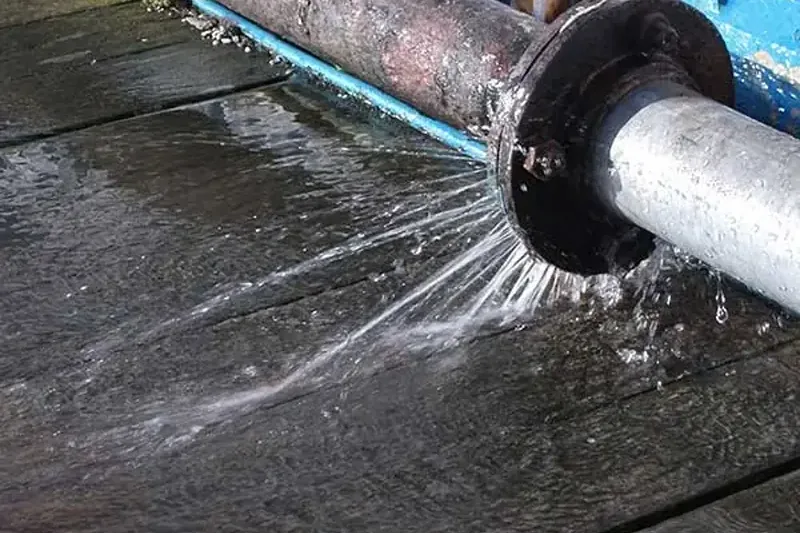
Pomona holds very different kinds of housing. The Lincoln Park Historic District and the historic downtown sit at one end of the range, while Phillips Ranch grew rapidly from the 1980s on hilly ground between downtown and Diamond Bar. A leak in either place starts the same way, but the pipes and the likely cause are not the same.
Key takeaways
- Pipe ages differ from street to street, so a leak is traced from where the water shows before anyone guesses at a cause.
- Freezing is rarely the cause here. The record low is 21 degrees F and the average December low is 41.5.
- Signs of a hidden leak are a rising water bill, the sound of running water with fixtures off, warm floor spots and damp baseboards.
- A wall or floor is opened only after the leak has been located.
- The plumber repairs the pipe. Extraction and drying are separate steps that start as soon as water is loose.
Two kinds of Pomona housing
The pipes in a historic house and in a hillside house from the 1980s or later do not share the same age, and they may not share the same history. Repairs, additions and remodels change what runs through a wall.
That is why leak work here starts with observation, not assumptions.
Downtown also includes an Arts District and Antique Row, and the same leak tracing logic applies to a storefront as it does to a house.
- Historic downtown and Lincoln Park streets: plumbing of different ages can meet in one house
- Phillips Ranch: nearly all residential, built out since the 1980s on hilly ground
- Everywhere: the age of a fitting matters more than the age of the neighborhood
Why freezing is not the usual cause
Hard freezes are rare in Pomona. The record low is 21 degrees F, and the average low is 43.1 in January and 41.5 in December.
A split pipe from ice is the exception here. Wear, corrosion, a loose fitting or a failed joint more often explain a leak, and those do not follow the calendar.
How a hidden leak announces itself
Most pipe leaks inside walls and under floors are quiet. The clues are small and they pile up.
Bills lag behind the leak. A leak found on a bill has often been running for a full cycle, which is why the meter test is faster.
- A water bill that rises with no change in habits
- The sound of running water when every fixture is off
- A warm spot on a floor, or a floor that feels damp
- Swelling baseboards, bubbling paint or a stain on drywall
- A meter that keeps moving after everything is shut off
Wall leak or slab leak?
Where the water shows decides how the work goes.
Leaks inside walls and ceilings
A leak in a wall or ceiling cavity is opened, extracted and dried cavity by cavity. The burst pipe water damage work includes finding the edge of the wet area before any wall is cut.
- Stains that spread upward from the base of a wall
- Paint that blisters or peels
- Baseboards that swell or lift
- Drywall that feels cool and damp to the touch
Leaks under a concrete floor
In a home with a concrete slab floor, a leak can run unseen for a long time. Leak detection comes before any flooring is lifted, and the right repair depends on the individual home.
The related steps appear under slab leak water damage.
- Warm patches on a floor
- Flooring that cracks, cups or lifts at the edges
- A steady hiss or trickle with every fixture off
- Damp baseboards along an outside wall
What to do first
A quick meter test sorts a hidden leak from normal use.
The main valve is usually near the water meter or where the pipe enters the house. Learning where it is before a leak happens saves time on the day it matters.
- Turn off every faucet, appliance and irrigation timer.
- Read the water meter, wait, and read it again.
- If the dial moved, shut off the main valve and look for wet spots.
- Photograph every stain, wet floor and swollen baseboard with the date.
- Move belongings away from the wet area.
Renters, owners and who acts first
In 2020, 47.0 percent of occupied homes in Pomona were rented and 53.0 percent were owner occupied. Households average 3.51 people, so fixtures run often.
In a rental, a tenant usually notices the leak and the owner approves the repair. A short written note with photos and the date helps both sides move quickly.
- Tenants: report the leak in writing and attach photos
- Owners: arrange the plumber and the drying together, since wet materials get worse each day
- Everyone: keep the water bill and the plumber's invoice
Drying after the leak is found
Drywall that stayed wet is cut out and baseboards are pulled. Insulation inside the wall is removed if it is soaked.
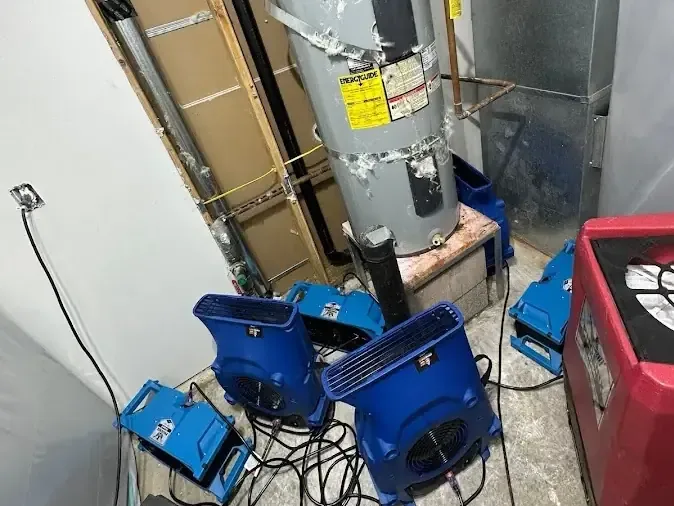
Air movers push air along the wall and a dehumidifier pulls moisture from the room.
Once the plumber has stopped the leak, the crew extracts standing water, removes materials that will not dry and sets drying equipment. Readings are taken each day until the structure reaches a dry reference.
Details on the local work are on the Pomona water damage pages, and the same process is described for burst and pinhole pipe leaks on the main service pages.
When a slab is wet, the flooring above is lifted so air can reach the concrete. Concrete dries slowly, so patience and readings matter.
- Extraction of any standing water
- Removal of wet drywall, baseboards and insulation
- Air movers and dehumidifiers set for the wet cavity
- Daily readings until the wall matches a dry reference
- Rebuild only after readings are dry
Questions
Can a pipe leak go on for weeks without a visible sign?
Yes. Water can run inside a wall or under a floor for a long time. A rising bill or a damp baseboard is often the first clue.
Does an older house always leak more?
No. A fitting that failed is a problem in any house. Age is one factor among many, including repairs and water pressure.
Why is the wall opened before the leak is fixed?
A crew often needs to see the pipe and the extent of the wet area. Moisture readings show how far to open so no more drywall is cut than needed.
Is a slab leak a different job?
It can be. Leaks under concrete need detection first, and flooring is lifted only where the readings call for it.
Who pays for a hidden pipe leak?
It depends on the policy and the cause. Sudden leaks are treated differently from long term seepage, so keep photos and the plumber's findings.
How long does drying a wall take after a pipe leak?
Drying time depends on how much water got in and how deep it soaked. Daily readings decide when the equipment comes out.