Slab Leak Water Damage in Pomona, CA
When a pipe beneath the concrete lets go, the restoration team maps where the water went, pulls up only the flooring that reads wet and dries the slab and wall base on measured readings, 24/7.
(888) 563-9619Floor warm or meter still turning? Report it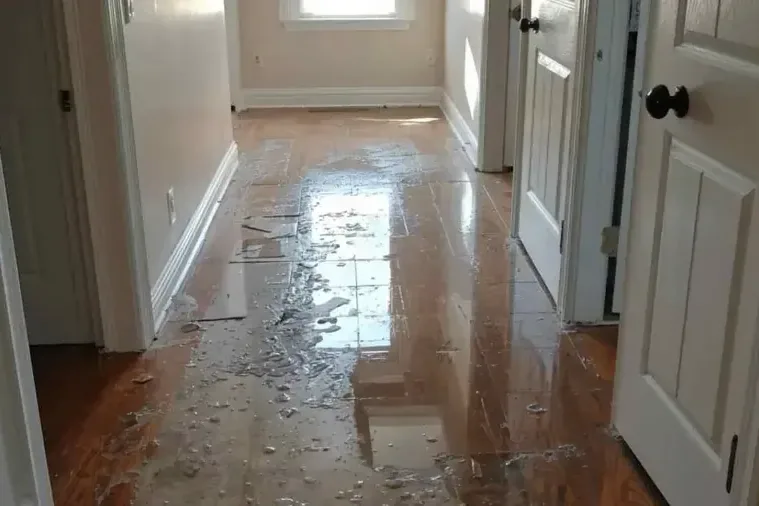
What every slab leak water damage job includes
Extraction comes first
Truck-mounted and portable extractors pull free water before any fan goes down, since lifting liquid water out is far faster than evaporating it.
Dried to IICRC S500
Air movers and LGR dehumidifiers are sized to the class of loss, and the equipment stays until readings sit within 2 to 4 points of a dry reference.
A claim file built on site
Moisture maps, daily psychrometric logs and timestamped photos taken before any demolition give the adjuster a clear record of the loss.
Valley houses, valley habits
Slab floors with copper underneath, attic air handlers and large floor plans decide where water hides, so the walkthrough checks each one.
What to do right now about slab leak water damage
- Close the main valve. Turn off the supply when the meter moves with every fixture off.
- Book leak detection. A plumber pinpoints the pipe so a repair can be planned.
- Note the warm spots. Mark where the floor feels warm or the carpet stays wet.
- Photograph the floor. Capture damp carpet, lifting planks and cracked tile first.
What does slab leak water damage cost in Pomona, CA?
Drying and flooring removal after a slab leak usually lands between $2,000 and $7,500, billed apart from the plumber's repair. How far the water spread, the type of flooring and how long the leak ran shape the total.
Found early
- A single room of flooring
- Carpet peeled back and dried
- Short leak, clean water
Usual slab leak
- Several rooms traced
- Flooring and base trim taken up
- Concrete dried with LGR units
Leak that ran for weeks
- Laminate or wood removed
- Wall bottoms opened up
- Longer concrete drying
What the claim file holds
Ranges are typical, not a quote: the water category, square footage, material class and how fast drying started move the number most. Sudden and accidental water from a pipe, appliance or tank is often covered by a homeowner policy, while surface flooding usually needs a separate flood policy, so check your own policy.
The mitigation team builds the file an adjuster reads: a moisture map, daily psychrometric logs, timestamped photos taken before demolition, the category and class, and a line-item scope. For a closer range, run the water damage cost calculator.
How slab leak water damage is handled, step by step
Trace the water
Infrared and meters outline the damp area.
Pull wet flooring
Only readings above dry come up.
Remove and vent
Water extracted, wall bottoms opened.
Dry the concrete
Dehumidifiers run until readings say dry.
Homes across Pomona run from the historic downtown and the Lincoln Park Historic District to Phillips Ranch, built out from the 1980s on, so the age of the plumbing under a floor changes from one street to the next. A leak below the concrete can soak the slab for days before anything shows.
How a hidden leak gives itself away
Watch for a patch of floor that feels warm underfoot, a water meter that keeps creeping with every fixture off, a bill that climbs for no reason or carpet that never quite dries. The slab leak warning check adds those clues up. A plumber locates and fixes the pipe, while the restoration team deals with the water it spread.
Taking up only what is wet
An infrared camera and pin and pinless meters outline the damp area before any demolition. Carpet and pad can usually be peeled back and dried. Laminate or glued wood sitting on a soaked slab normally has to come up, and tile is often left down when the grout lets moisture out.
Why concrete needs time
A slab holds water deep inside and lets it go slowly, especially during the damp winter months. Low-grain dehumidifiers and air movers work across the exposed concrete while wall bottoms along the leak are vented, and readings are written down every day until they reach a dry reference, as laid out under structural drying.
Slab leak water damage across Pomona and nearby communities
The restoration team covers ZIP 91766, 91767 and 91768, from Downtown, the Arts District and the Lincoln Park Historic District out to Phillips Ranch, Spadra and the streets near Fairplex.
The same service nearby: slab leak water damage in Walnut, Montclair, Glendora.
Related water damage services in Pomona
Slab Leak Water Damage questions, answered
Still dealing with it?
Meter turning with every faucet off? Close the main and call before more flooring soaks.
(888) 563-9619 Ask how the concrete gets driedWhat points to a slab leak behind the water damage?
A warm spot on the floor, a meter that keeps moving with everything shut off, a sudden jump in the water bill or carpet that stays damp without a visible source. Electronic leak detection from a plumber settles it.
Does the restoration team repair the leaking slab pipe?
No, a plumber repairs or reroutes it. The restoration team takes care of the water: lifting flooring that reads wet, extracting, drying the concrete and walls and keeping records for the claim.
Will all of the flooring be torn out after a slab leak?
Rarely. The moisture map decides. Carpet often peels back and dries, tile may stay down and glued wood or laminate over wet concrete usually has to go.
How long until the slab is dry again?
Concrete gives up water slowly, so five to ten days is typical and longer if the leak ran for weeks. Equipment stays until readings come within 2 to 4 points of a dry reference.
Is slab leak water damage covered for renters and owners?
Owners should check whether their policy covers the water damage and access to the pipe, which many do, though not the pipe itself. Renters should report the leak to the landlord and review their own policy.
Water under the slab does not stay put
The restoration team outlines the damp slab, takes up only what is wet and dries it by readings, at any hour.
(888) 563-9619Map my wet slab tonight