Structural Drying and Dehumidification in El Monte
Water that is extracted still leaves floors, framing and drywall damp. Fans and dehumidifiers draw that moisture out, and daily readings show when El Monte homes and businesses are dry enough to rebuild.
(888) 563-9619Ask about drying equipment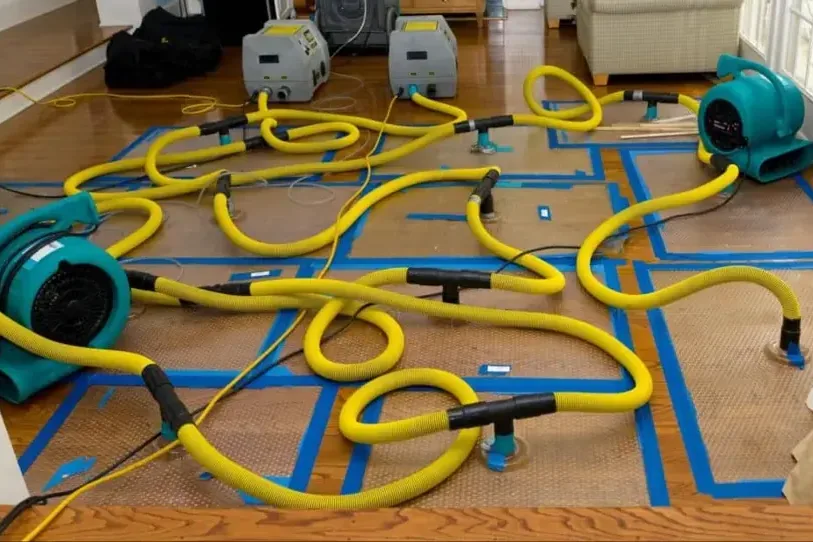
What every structural drying and dehumidification job includes
Extraction comes first
Truck-mounted and portable extractors pull free water before any fan goes down, since lifting liquid water out is far faster than evaporating it.
Dried to IICRC S500
Air movers and LGR dehumidifiers are sized to the class of loss, and the equipment stays until readings sit within 2 to 4 points of a dry reference.
A claim file built on site
Moisture maps, daily psychrometric logs and timestamped photos taken before any demolition give the adjuster a clear record of the loss.
Valley houses, valley habits
Slab floors with copper underneath, attic air handlers and large floor plans decide where water hides, so the walkthrough checks each one.
What to do right now about structural drying and dehumidification
- Map the wet areas. Meters trace moisture through floors and walls.
- Place the equipment. Fans and dehumidifiers are placed where readings run highest.
- Read it daily. Moisture is checked in the same spots each day.
- Pull the equipment. Machines leave once readings match dry areas.
What does structural drying and dehumidification cost in El Monte, CA?
Drying a small, clean water loss costs $500 to $2,000. A single room or a slab leak runs $2,500 to $7,500, while a full floor or a sewage job reaches $8,000 to $25,000.
Small clean water loss
- One or two wet rooms
- Few air movers
- Short drying run
Room sized or slab leak
- Several rooms involved
- Dehumidifiers running daily
- Three to five days
Whole floor or sewage
- Most of a floor wet
- Sewage or long standing water
- Extended dry out
What the claim file holds
Ranges are typical, not a quote: the water category, square footage, material class and how fast drying started move the number most. Sudden and accidental water from a pipe, appliance or tank is often covered by a homeowner policy, while surface flooding usually needs a separate flood policy, so check your own policy.
The mitigation team builds the file an adjuster reads: a moisture map, daily psychrometric logs, timestamped photos taken before demolition, the category and class, and a line-item scope. For a closer range, run the water damage cost calculator.
How structural drying and dehumidification is handled, step by step
Map the moisture
Meters mark every wet area.
Set the equipment
Fans and dehumidifiers start.
Read it daily
The same spots are rechecked.
Pull and confirm
Equipment leaves at normal readings.
Extraction removes the water that is visible, but drying removes the water that is not. Wood, drywall and concrete hold moisture long after a floor looks dry, and structural drying is the controlled process that clears it. Skipping it invites buckling floors, swollen trim and musty odors.
How drying equipment works
Fans move warm, dry air over wet surfaces to lift moisture out of them, and dehumidifiers collect that moisture from the air before it can settle back into the materials. The two run together in a closed room, which is why windows stay shut during a dry out. Sewage jobs need the cleanup first, as described under sewage backup cleanup.
Why winter jobs run longer
January, February and March are the wettest months in El Monte and when most structural drying jobs begin. Damp winter air slows evaporation, while the dry summer, with only 0.04 inches of rain in July, helps materials give up moisture faster.
Knowing when the job is done
Technicians record moisture in the same spots every day and compare them to readings from an unaffected part of the house. The equipment comes out only when the wet areas match the dry ones. Water pulled out first is handled in water extraction.
Structural drying and dehumidification across El Monte and nearby communities
Structural drying covers the whole city, from the central business district, Mountain View and Flair Park to the blocks along Valley Boulevard, in ZIP codes 91731 and 91732.
The same service nearby: structural drying and dehumidification in Walnut, Glendora, Pomona.
Related water damage services in El Monte
Structural Drying and Dehumidification questions, answered
Still dealing with it?
Wet framing gets harder to dry the longer it sits, so describe the loss and the plan follows.
(888) 563-9619 Outline the wet roomsHow long does structural drying take?
Most clean water losses take about three to five days, though hardwood, thick framing and sewage jobs can run longer. Readings, not the calendar, decide.
Why are the windows kept closed?
Dehumidifiers work best in a closed space. Open windows let humid outside air back in and slow the drying, which means the equipment has to run longer.
Can drying start before the leak is fixed?
Sometimes, but the source has to be stopped first or the structure keeps getting wet. A plumber or roofer typically repairs the leak while drying equipment is set up.
How does the team know it is dry?
Moisture meters compare wet areas to an unaffected part of the home, and the equipment leaves only when the numbers match. Photos and logs document the readings for the insurer.
Does fast drying stop later damp problems?
Fast, complete drying removes the damp conditions mold needs, which can begin to grow within 24 to 48 hours. Slow or incomplete drying is how hidden growth starts.
Get the structure properly dried
The drying crew works at any hour, placing equipment by room size and tracking readings daily until the structure matches a dry area.
(888) 563-9619Call about the dry out