Appliance and Supply Hose Leaks in Glendora, CA
Supply hoses behind dishwashers, washers and refrigerators fail without warning. In Glendora's multi-family complexes one leak can reach a neighboring unit, so extraction and drying start with tracing where the water went.
(888) 563-9619Report an appliance leak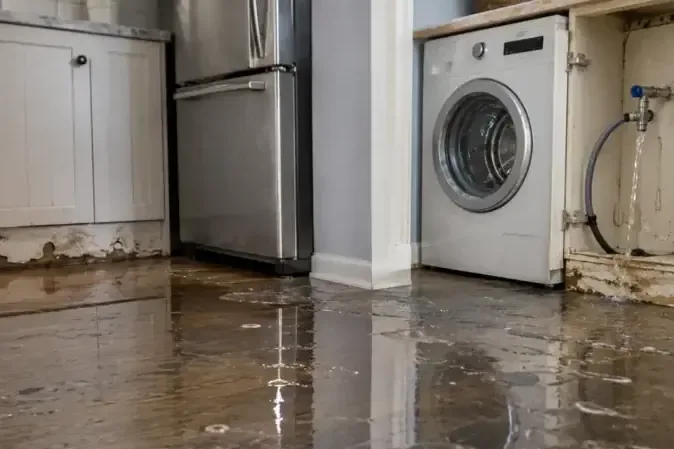
What every appliance and supply hose leaks job includes
Extraction comes first
Truck-mounted and portable extractors pull free water before any fan goes down, since lifting liquid water out is far faster than evaporating it.
Dried to IICRC S500
Air movers and LGR dehumidifiers are sized to the class of loss, and the equipment stays until readings sit within 2 to 4 points of a dry reference.
A claim file built on site
Moisture maps, daily psychrometric logs and timestamped photos taken before any demolition give the adjuster a clear record of the loss.
Valley houses, valley habits
Slab floors with copper underneath, attic air handlers and large floor plans decide where water hides, so the walkthrough checks each one.
What to do right now about appliance and supply hose leaks
- Close the valve. Shut the appliance supply valve or the main.
- Extract the water. Vacuums clear floors and cabinet bases.
- Check the neighbors. Meters test adjoining rooms, ceilings below and shared walls.
- Dry and verify. Equipment runs until readings are normal.
What does appliance and supply hose leaks cost in Glendora, CA?
Appliance leak costs grow with the number of rooms the water crossed. A contained spill is a small job, while a leak that reached other rooms or another unit needs more drying and rebuilding.
Contained spill
- One appliance area
- Floor extracted
- Short fan run
Kitchen or laundry
- Cabinet bases dried
- Flooring lifted
- Several days drying
Spread to other rooms
- Hallway and bedrooms wet
- Shared walls opened
- Extended readings
What the claim file holds
Ranges are typical, not a quote: the water category, square footage, material class and how fast drying started move the number most. Sudden and accidental water from a pipe, appliance or tank is often covered by a homeowner policy, while surface flooding usually needs a separate flood policy, so check your own policy.
The mitigation team builds the file an adjuster reads: a moisture map, daily psychrometric logs, timestamped photos taken before demolition, the category and class, and a line-item scope. For a closer range, run the water damage cost calculator.
How appliance and supply hose leaks is handled, step by step
Stop
Close the supply valve.
Extract
Clear water from floors and cabinets.
Test
Check adjoining rooms and walls.
Dry
Run equipment until readings settle.
Appliance leaks are quiet. A hose weeps behind a washer or an ice maker feed drips under a refrigerator, and the water travels under flooring and into cabinet bases before anyone sees a puddle.
Where the water goes
Kitchen cabinets, laundry closets and hallway flooring catch most of it. Moisture meters check the toe kicks, the back of the cabinets and the wall behind the appliance, because those spots stay wet long after the visible water is wiped up. Water extraction comes first, then the drying plan.
Leaks that reach other units
Attached homes and multi-family complexes share walls, floors and ceilings, so a hose failure can wet the unit below or beside. The team documents where the water crossed, dries each affected space and keeps notes that owners and managers can use to sort out responsibility.
Dry-out and replacement
Laminate and engineered flooring swell when water gets under them, while tile survives better. Toe kicks and cabinet bases are often replaced, and the failed hose is swapped by a plumber or the owner. Burst and pinhole pipe leaks follow the same readings-first dry-out.
Appliance and supply hose leaks across Glendora and nearby communities
Appliance leak work covers ZIP 91740 and 91741, including multi-family complexes and attached homes near Foothill Boulevard and single-family streets in Alosta and Charter Oak.
The same service nearby: appliance and supply hose leaks in Walnut, Pomona, Montclair.
Related water damage services in Glendora
Appliance and Supply Hose Leaks questions, answered
Still dealing with it?
An appliance leak can reach the unit next door, so extraction should begin before water crosses a shared wall.
(888) 563-9619 Glendora appliance leak helpWhich appliances commonly leak?
Dishwashers, washing machines and refrigerators with ice makers are frequent sources, usually at the supply hose or a loose connection behind the unit.
Can a small slow leak cause real damage?
Yes. A slow drip behind a washer or under a dishwasher can rot cabinet bases and loosen flooring over weeks before it shows.
What if the water reached a neighbor's unit?
The team dries the affected space and records where the water crossed. Owners, managers and insurers can use those notes to work out responsibility.
Should the appliance be moved?
Pulling it out helps the crew reach the wall and floor behind it, and the hose is easier to repair once the unit is out. Turn off the supply valve first.
Is a kitchen floor worth saving?
Tile and sealed vinyl often are. Laminate and engineered wood that swelled usually are not, and readings under the flooring help decide.
Does insurance cover appliance leaks?
Sudden hose failures are commonly covered for the water damage, though slow leaks may not be. Photos and dated readings help the adjuster tell the difference.
A small hose leak can soak a whole floor
Describe the appliance, the wet rooms and whether a neighbor is affected, and the team will explain the plan.
(888) 563-9619Report the hose leak