Water Extraction and Removal in Glendora, CA
Whether a winter storm or a failed supply hose put the water on the floor, extraction comes first. Pumps and wet vacuums remove it so drying can begin before the walls absorb more.
(888) 563-9619Describe the standing water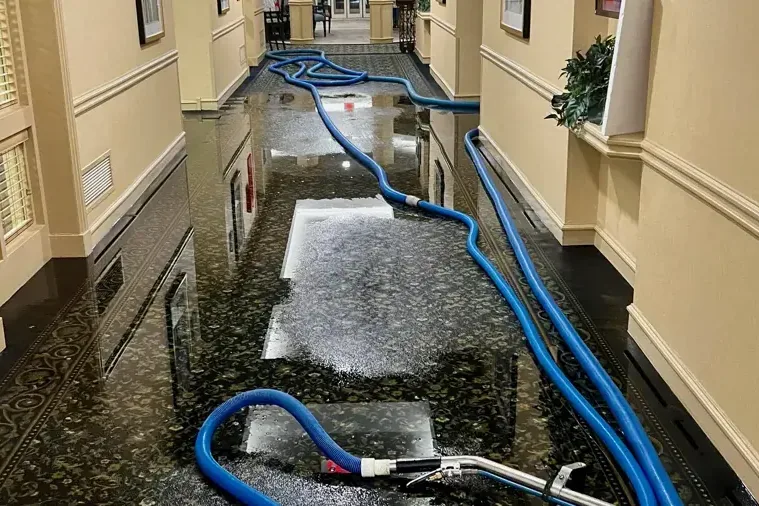
What every water extraction and removal job includes
Extraction comes first
Truck-mounted and portable extractors pull free water before any fan goes down, since lifting liquid water out is far faster than evaporating it.
Dried to IICRC S500
Air movers and LGR dehumidifiers are sized to the class of loss, and the equipment stays until readings sit within 2 to 4 points of a dry reference.
A claim file built on site
Moisture maps, daily psychrometric logs and timestamped photos taken before any demolition give the adjuster a clear record of the loss.
Valley houses, valley habits
Slab floors with copper underneath, attic air handlers and large floor plans decide where water hides, so the walkthrough checks each one.
What to do right now about water extraction and removal
- Stop the source. Close the valve or block the entry so more water stops arriving.
- Remove the volume. Pumps and wands take down standing water across the floor.
- Pull it from materials. Wet vacuums and weighted tools lift water from carpet and pad.
- Hand off to drying. Air movers and dehumidifiers take over once the surface water is gone.
What does water extraction and removal cost in Glendora, CA?
Extraction costs track the area covered and how deep the water sat. A spot cleanup is a small job, while a whole floor of standing water takes more crew time, more equipment and a longer dry-out afterward.
Spot extraction
- One room edge or closet
- Wet vacuum and fans
- Short monitoring period
Several rooms
- Two to four wet rooms
- Pumps and floor mats
- Daily moisture readings
Whole floor
- Water across a level
- Weighted carpet extraction
- Wall and floor drying plan
What the claim file holds
Ranges are typical, not a quote: the water category, square footage, material class and how fast drying started move the number most. Sudden and accidental water from a pipe, appliance or tank is often covered by a homeowner policy, while surface flooding usually needs a separate flood policy, so check your own policy.
The mitigation team builds the file an adjuster reads: a moisture map, daily psychrometric logs, timestamped photos taken before demolition, the category and class, and a line-item scope. For a closer range, run the water damage cost calculator.
How water extraction and removal is handled, step by step
Trace the water
Find where it traveled and test wet materials.
Extract
Remove standing water by pump and vacuum.
Dry
Place air movers and dehumidifiers on a plan.
Verify
Take readings until the structure is dry.
Water losses in Glendora arrive two ways: a winter storm that drives rain into a garage or entry, or a failed pipe, appliance or air-conditioner drain that floods a room from inside. Either way, the standing water has to leave before anything else can dry.
Why extraction comes before drying
Dehumidifiers work on moisture in the air and in surfaces, not on pooled water. Left in place, a few inches of water keep wicking up drywall and baseboards and soak carpet pad that will have to be replaced. Removing the volume first shortens everything that follows.
Equipment sized to the room
A hallway that took on a shallow spill may need one pump and a wet vacuum. A kitchen and living room flooded by a failed water heater may call for several passes, a drying mat over hardwood and weighted extraction on carpet. The crew chooses tools by what is actually wet.
What the crew checks while the water moves
Before water leaves a room, the crew traces where it traveled: under baseboards, into wall cavities and through flooring seams. Moisture readings mark the edges of the wet zone so the plan covers hidden areas, and photos go into the file that the insurance adjuster will ask for. Once the volume is out, structural drying takes over, and a burst pipe behind a wall follows the same order, as the burst pipe page explains.
Water extraction and removal across Glendora and nearby communities
The restoration team covers ZIP 91740 and 91741, from Glendora Village and the Route 66 corridor to Alosta, Charter Oak and the foothill streets near the South Hills.
The same service nearby: water extraction and removal in Walnut, Pomona, Montclair.
Related water damage services in Glendora
Water Extraction and Removal questions, answered
Still dealing with it?
Standing water in a room is easier to remove the sooner extraction starts, before drywall and flooring take it in.
(888) 563-9619 Talk to an extraction crew in GlendoraShould standing water be removed before the fans go on?
Yes. Fans and dehumidifiers dry air and surfaces, but pooled water keeps feeding the walls and flooring, so extraction goes first and the drying equipment follows.
Can wet carpet stay after extraction?
Carpet from a clean-water loss can frequently stay, since it is lifted, extracted and dried on the spot. The pad underneath is normally replaced because it holds water like a sponge.
What if the water came from a storm?
Rain runoff can carry silt and grime, so the crew treats it as contaminated until the source is known, extracts it and cleans the surfaces before any drying equipment goes in.
Does extraction work on hardwood and tile?
Yes. Hardwood gets a drying mat system that pulls water from the boards, and tile floors are extracted and then checked for water trapped beneath the tile and in the subfloor.
How can a homeowner tell the walls are dry?
Moisture meters read the drywall and framing, and a thermal camera can show wet areas behind the surface. Readings, not how the wall looks, show whether it is dry.
When should the insurance company be called?
As soon as the water is stopped. Photos taken before extraction help the claim, and the team keeps its own notes on what was removed and why.
Standing water does not drain itself away
Describe where the water is, how deep it looks and what it came from, and the crew will explain the extraction steps that come first.
(888) 563-9619Get extraction started