Ceiling Leak Water Damage in Glendora, CA
A ceiling stain in a Glendora home usually traces to a winter roof leak or to a supply, drain or air-conditioner pipe above it. The source comes first, then the wet drywall is dried or removed.
(888) 563-9619Report a ceiling stain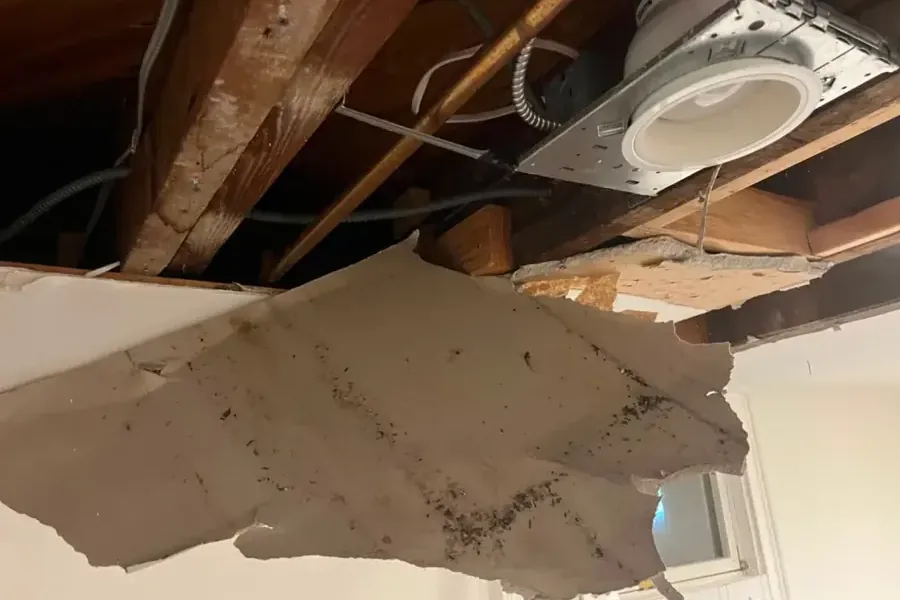
What every ceiling leak water damage job includes
Extraction comes first
Truck-mounted and portable extractors pull free water before any fan goes down, since lifting liquid water out is far faster than evaporating it.
Dried to IICRC S500
Air movers and LGR dehumidifiers are sized to the class of loss, and the equipment stays until readings sit within 2 to 4 points of a dry reference.
A claim file built on site
Moisture maps, daily psychrometric logs and timestamped photos taken before any demolition give the adjuster a clear record of the loss.
Valley houses, valley habits
Slab floors with copper underneath, attic air handlers and large floor plans decide where water hides, so the walkthrough checks each one.
What to do right now about ceiling leak water damage
- Stop the water above. Shut off the supply or protect the roof opening.
- Release a bulge. Pierce a sagging spot over a bucket to drain it safely.
- Open and extract. Wet drywall and insulation are cut out and water removed.
- Dry the cavity. Equipment dries joists and walls until readings are normal.
What does ceiling leak water damage cost in Glendora, CA?
Ceiling jobs cost more when water has soaked insulation and drained into walls. A single stain is a small repair, while a whole room ceiling or a ceiling plus wall damage needs more removal and drying.
One stain
- Single drywall patch
- Source traced
- Short drying run
Room ceiling
- Full ceiling section
- Insulation replaced
- Joists dried
Ceiling and walls
- Water in wall cavities
- Wider opening
- Extended readings
What the claim file holds
Ranges are typical, not a quote: the water category, square footage, material class and how fast drying started move the number most. Sudden and accidental water from a pipe, appliance or tank is often covered by a homeowner policy, while surface flooding usually needs a separate flood policy, so check your own policy.
The mitigation team builds the file an adjuster reads: a moisture map, daily psychrometric logs, timestamped photos taken before demolition, the category and class, and a line-item scope. For a closer range, run the water damage cost calculator.
How ceiling leak water damage is handled, step by step
Trace
Follow the moisture back to its source.
Open
Cut out soaked drywall in sections.
Dry
Run equipment on the joists and walls.
Confirm
Check the readings before repairs begin.
A brown ring, a bubble in the paint or a sag in the drywall means water is sitting above the ceiling. The longer it stays, the more insulation, framing and drywall it soaks, so the first job is working out where it comes from.
Finding what is leaking above
A stain under a bathroom usually points to a supply or drain pipe, one in a hallway may trace to the roof, and one near an air handler may come from an overflowing condensate pan. Meters and a thermal camera follow the moisture back to the source, which the plumber or roofer then repairs.
Opening a sagging ceiling
A bulging ceiling holds water that can fall without warning, so a small hole is made to let it drain into a bucket. Soaked drywall is then cut out in sections, wet insulation is bagged, and the cavity is opened wide enough for air to reach the joists.
Drying before repair
Painting over a stain seals moisture in and the mark returns. Air movers and dehumidifiers dry the joists and nearby walls until readings are normal, and only then are drywall, texture and paint put back. Roof leak damage and AC condensate overflow are two common sources.
Ceiling leak water damage across Glendora and nearby communities
Ceiling leak work covers ZIP 91740 and 91741, from homes and businesses along Route 66 to the houses of Alosta, Charter Oak and the hillside streets of the Easley Canyon area.
The same service nearby: ceiling leak water damage in Walnut, Pomona, Montclair.
Related water damage services in Glendora
Ceiling Leak Water Damage questions, answered
Still dealing with it?
A wet ceiling keeps getting heavier, so draining and opening it early prevents a collapse and a larger repair.
(888) 563-9619 Tell the team about the ceilingIs a ceiling stain always a roof leak?
No. Roof leaks are one source, but supply pipes, drain pipes and air-conditioner condensate pans above the ceiling cause stains too, so the source is traced before drying starts.
Is it safe to poke a hole in a sagging ceiling?
A small hole over a bucket lets trapped water out in a controlled way, which is safer than waiting for the whole section to fall. Stand clear of the area below and avoid any nearby light fixture.
Can a stained ceiling be painted over?
Not until it is dry. Paint hides the mark but traps moisture, and the stain returns. Readings show when the ceiling and the joists above it are ready.
Does the insulation above need to come out?
Wet insulation holds water against the drywall and stops insulating, so soaked sections are removed. Dry insulation nearby can stay.
How big is the hole the team cuts?
Only as large as the readings require. Sections are cut along joists where possible so the repair is a clean patch.
Does insurance pay for ceiling repairs?
Sudden leaks are commonly covered, while slow ones may not be. Photos and dated readings help the adjuster see the cause and the timeline.
A stained ceiling needs the source found first
Describe the stain, its color and what sits above it, and the team will explain how the water is traced, the ceiling is opened and the joists are dried.
(888) 563-9619Report the stain