Slab Leak Water Damage in Glendora, CA
A slab leak is a water pipe leaking beneath a concrete floor. Once the leak is traced and stopped, the restoration team dries the slab and the flooring above it so moisture does not linger.
(888) 563-9619Report a wet or warm floor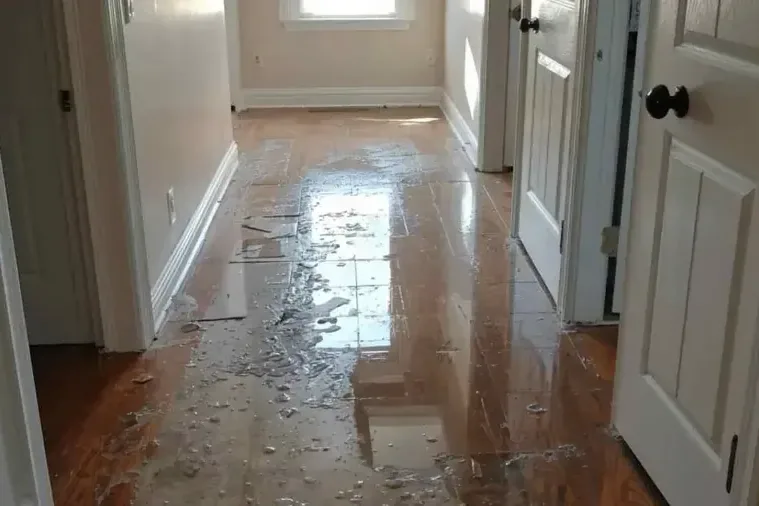
What every slab leak water damage job includes
Extraction comes first
Truck-mounted and portable extractors pull free water before any fan goes down, since lifting liquid water out is far faster than evaporating it.
Dried to IICRC S500
Air movers and LGR dehumidifiers are sized to the class of loss, and the equipment stays until readings sit within 2 to 4 points of a dry reference.
A claim file built on site
Moisture maps, daily psychrometric logs and timestamped photos taken before any demolition give the adjuster a clear record of the loss.
Valley houses, valley habits
Slab floors with copper underneath, attic air handlers and large floor plans decide where water hides, so the walkthrough checks each one.
What to do right now about slab leak water damage
- Shut off the water. Close the main valve while the plumber traces the leak.
- Extract surface water. Wet vacuums clear the floor and any carpet over the slab.
- Map the moisture. Meters and a thermal camera show how far the water traveled.
- Dry slab and flooring. Air movers and dehumidifiers run until slab readings settle.
What does slab leak water damage cost in Glendora, CA?
Slab leaks cost more the longer they run, because the water spreads farther under the flooring and the concrete takes longer to dry. Catching a damp patch early keeps the job in the first card.
Caught early
- One room of flooring
- Slab dried and tested
- Minimal wall removal
Typical slab leak
- Room-sized wet area
- Flooring lifted to dry
- Slab and wall checks
Long-running leak
- Water in several rooms
- Cabinets and walls opened
- Extended slab drying
What the claim file holds
Ranges are typical, not a quote: the water category, square footage, material class and how fast drying started move the number most. Sudden and accidental water from a pipe, appliance or tank is often covered by a homeowner policy, while surface flooding usually needs a separate flood policy, so check your own policy.
The mitigation team builds the file an adjuster reads: a moisture map, daily psychrometric logs, timestamped photos taken before demolition, the category and class, and a line-item scope. For a closer range, run the water damage cost calculator.
How slab leak water damage is handled, step by step
Trace the leak
A plumber finds and stops the leak.
Extract
Surface water comes off the floor.
Open and dry
Flooring lifts and the slab dries.
Confirm
Readings match dry areas of the home.
A slab leak often shows up first as a damp patch of carpet, a warm spot on the floor or a water bill that climbs while nothing is running. By the time it surfaces, water has usually spread under the flooring and into the base of the walls, whether the house is an older bungalow or a newer ranch-style home.
How a slab leak gets traced
A plumber locates the leak by tracing the pipe and shutting off the supply, and the restoration team starts once the water has stopped. Extraction clears surface water, then moisture meters map how far it moved through the flooring, baseboards and lower walls.
Drying the slab and what sits on top
Concrete holds moisture far longer than drywall does, so readings on the slab set the schedule. Laminate, hardwood and carpet over a wet slab are lifted or opened so air can reach both faces, and dehumidifiers keep running until the slab readings settle.
Flooring and cabinets
Tile can sometimes stay when the water sat below it, while engineered wood and laminate cup and swell fast and usually come out. Cabinet bases and baseboards are checked for hidden moisture before rebuilding. Burst and pinhole pipe leaks and structural drying rely on the same readings-first approach.
Slab leak water damage across Glendora and nearby communities
Slab leak work covers ZIP 91740 and 91741, from older bungalows near the Village to ranch-style homes in Alosta and Charter Oak, with Foothill Boulevard and Arrow Highway as the main roads.
The same service nearby: slab leak water damage in Walnut, Pomona, Montclair.
Related water damage services in Glendora
Slab Leak Water Damage questions, answered
Still dealing with it?
A pipe leaking under the floor keeps wetting the slab until it is traced, so finding it early keeps the dry-out smaller.
(888) 563-9619 Ask about slab dry-outsHow can a homeowner tell a slab leak is happening?
Common clues are a warm spot on the floor, the sound of running water with every fixture off, damp carpet and a water bill that rises without a reason.
Who fixes the pipe?
A plumber repairs or reroutes the pipe. The restoration team handles the water damage: extraction, flooring removal where needed and drying the slab and walls.
Does the slab have to be dried?
Yes. Concrete holds moisture long after the surface looks dry, and flooring laid over a damp slab can fail, so readings on the slab decide when the dry-out ends.
Can flooring stay in place?
Sometimes. Tile that was only wet from below can stay, but laminate and engineered wood usually swell and have to come out so both sides can dry.
Does homeowners insurance cover a slab leak?
Coverage depends on the policy and on whether the carrier treats the pipe repair and the resulting water damage separately. Ask the adjuster, and keep the plumber's report with the restoration records.
Is there a risk of mold?
Moisture trapped under flooring is one place growth can start in the 24 to 48 hour window, which is why drying equipment goes in quickly.
A wet floor over concrete needs more than fans
Describe the damp spot or warm floor and the team will explain how the leak is traced and the slab and flooring dried.
(888) 563-9619Report the damp floor